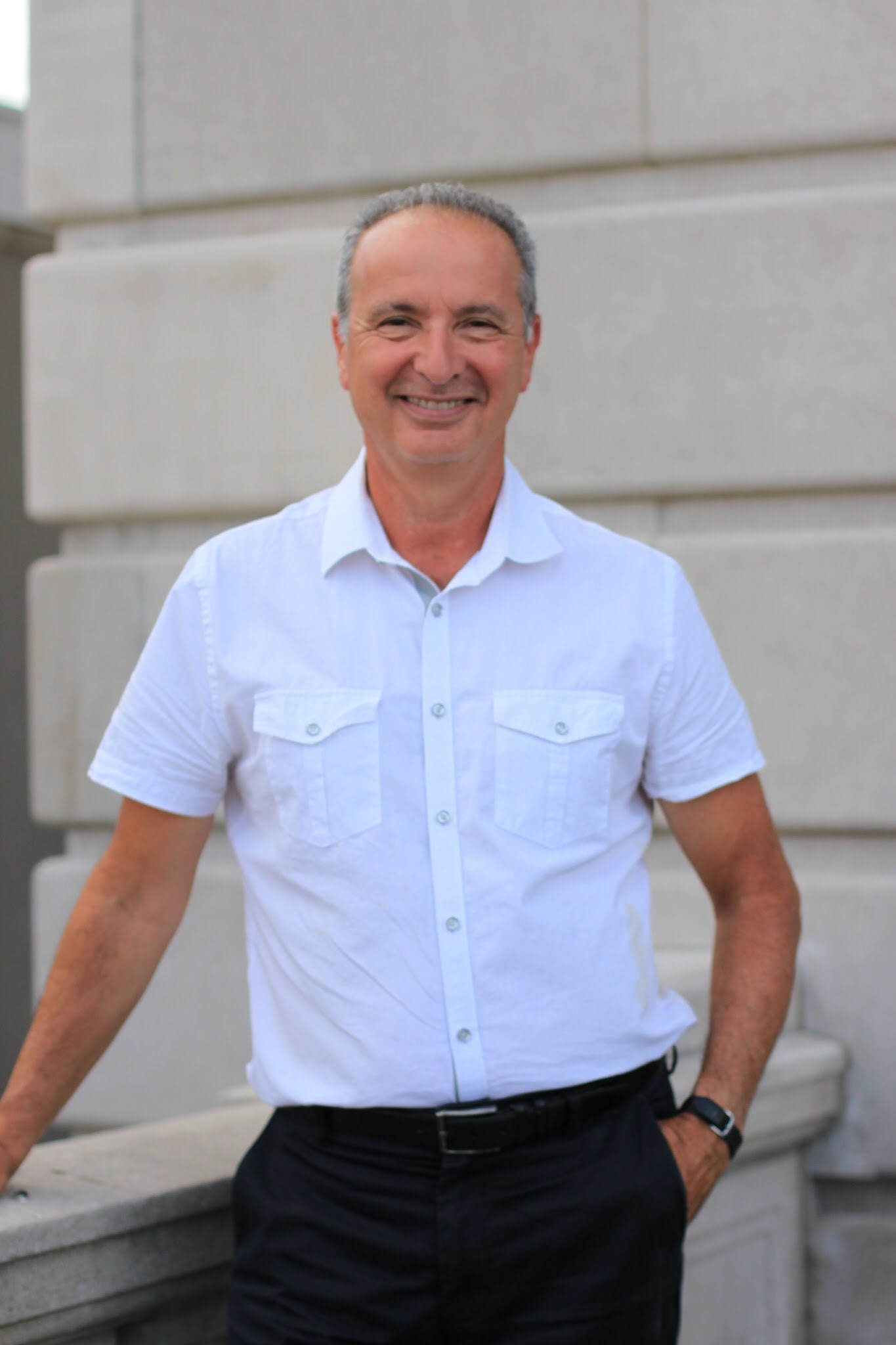
Pete Scazzero, after leading New Life Fellowship Church for 26 years, co-founded Emotionally Healthy Discipleship, a groundbreaking ministry transforming church culture that multiplies deeply changed leaders and disciples for the sake of Jesus’ mission in the world.
Pete hosts the top ranked, Emotionally Healthy Leader Podcast and is the author of a number of bestselling books, including The Emotionally Healthy Leader, Emotionally Healthy Spirituality, and Emotionally Healthy Discipleship. Pete and his wife Geri also developed The Emotionally Healthy Discipleship Course (Part 1 and 2), a ground-breaking Course being used by over 1400 churches in North America along with many others around the world. His books and materials have been translated in over 25 different languages.
Update on External Speaking and Priorities
After a great deal of prayer, reflection, and counsel, I have decided that I will no longer accept speaking engagements, whether in person or via Zoom, for interviews, workshops, or classes (aside from a very few, pre-existing commitments).
Why? I have a deep sense from God to focus on prayer, study, the mentoring of pastors/leaders, and writing (in particular, The EH Marriage Course that will include a book, workbook and streaming video).
That deep sense of “sentness” applies also to giving visionary leadership to EHD in her mission to “transform church culture through the multiplication of deeply changed leaders and disciples” as well as delivering weekly EH Leader podcasts and occasional speaking at EHD events and webinars.
I’ve become convinced that it is not wise or prudent to be distracted from the work I feel I “cannot not do”– especially in light of the diminishing amount of time available to me.
My work has always been done in local, intimate settings such as our local church when I was Lead Pastor and now in my work mentoring leaders/pastors. While I have done some traveling to speak in the past, it was always difficult for me. The increasingly alien and impersonal nature of it finally grew to this point when I realized this season was over.
I am confident this is the right thing to do; indeed, the necessary thing to do. I trust future, long-term fruit will bear out the wisdom of this decision.
Early Life & Education
Pete was born to an Italian-American immigrant family from Brooklyn, NY. His grandparents, of both his mother and father, were from a small village outside Naples, Italy. Their family owned an Italian bakery before moving to a New Jersey suburb less than two miles from Manhattan.
Pete majored in English and History at Glassboro State College (now Rowan University) as well as Secondary Education. After teaching high-school English, he joined the staff of Inter-Varsity Christian Fellowship (IVCF) for three years – working at Rutgers University and other schools in New Jersey/New York, focusing on launching new Christian fellowships and mobilizing students for evangelism.
After leaving IVCF, he studied at Princeton Theological Seminary for one year, followed by two years at Gordon-Conwell Theological Seminary from which he graduated with a Masters of Divinity (M.Div). He later received his Doctor of Ministry in Marriage and Family from Eastern Baptist Theological Seminary (Eastern University).
Six months before graduation, Pete married Geri who was also an Inter-Varsity Christian Fellowship staff member. They then moved as newlyweds to Costa Rica for one year to learn Spanish before returning to New York City. The following year, they moved to Queens where Pete served as an assistant pastor in a 300-person, Spanish church and taught in a Spanish-language Bible Institute in the Bronx.
Pete describes that formative time as follows: “During this time, Geri and I not only perfected our Spanish but were immersed in the world of 2 million undocumented immigrants from around the globe. We became friends with people who had fled death squads in El Salvador, drug cartels in Colombia, civil war in Nicaragua, and implacable poverty in Mexico and the Dominican Republic. It was just the preparation we needed for starting a new church in a working-class, multiethnic section of Queens where more than 70 percent of the 2.4 million residents are foreign born. It also shaped our understanding of the power of the gospel and the church, and how much the largely invisible poor have to teach the prosperous North American church.” National Geographic named “Elmhurst 11373 the most ethnically diverse zip code in the United States.” In another study, it was called, “perhaps the most ethnically mixed community in the world.
The Journey of New Life Fellowship
Pete launched New Life Fellowship Church, first in English in 1987, and then in Spanish (Iglesia Nueva Vida) in 1991, serving as lead pastor of both congregations. Julio Rodriguez took the leadership of Iglesia Nueva Vida in 1996, expanding that work and planting over twenty new churches throughout Latin America from that time till today. One significant distinctive of New Life was her location in Corona/Elmhurst, Queens and her commitment to bridge racial, cultural, economic and gender barriers through the power of the gospel. As a result, the church became well-known as one of the most multiracial churches in the United States with people from over 73 countries.
At the same time, the church launched a highly effective Community Development Corporation in 1989 to serve the poor and marginalized in the community through a variety of ministries such as: homeless outreach, a food and clothing pantry, a community health center, tutoring, English second language classes, and youth mentoring.
The Launch of Emotionally Healthy Discipleship
After experiencing rapid growth and planting 4 other churches, Pete and Geri hit a wall. Pete describes 4 factors that moved them (“kicking and screaming” as he describes it) into what is widely known today as emotionally healthy discipleship.
First, Pete was overworked, harried, and frustrated as a pastor/leader. Secondly, the Spanish congregation split with two hundred people leaving to start a new church. This left him “angry, bitter, and depressed –preaching love and forgiveness on Sundays and cursing alone in (his) car on Mondays.” Thirdly, his wife Geri was lonely, tired, and feeling like a single mom with four young daughters. And finally, he could no longer deny that the discipleship and leadership formation in his own life, along with that of the church, was shallow and unsustainable long-term.
He wrote: “With all my education and background in prayer and the Bible, it was quite a shock to realize that there were whole layers of my life that nevertheless remained untouched by God. I discovered that the problem wasn’t the Christian faith itself but rather the way we had been discipled and were made discipled.” Then, in 1996, God met Pete and Geri in an extraordinary way and they realized that emotional maturity and spiritual maturity were inseparable, that it is not possible to be spiritually mature while remaining emotionally immature.
Making the link radically transformed their personal journey with Christ, their marriage, their parenting, and, ultimately, New Life Fellowship Church. Pete and Geri, along with the NLF leadership team, then embarked on a journey of research, study, and intentional personal growth over the next twenty-six and a half years. They dedicated themselves to studying and researching this link between emotional and spiritual maturity – in Scripture, historical theology, church history, family systems theory, monastic movements and spirituality, contributions from the global church, marriage and family studies, interpersonal neurobiology, ministry to the poor and marginalized, and Quaker spirituality. Their goal was simple – to move from a traditional discipleship model to a transformative one in which people experienced deep change in Jesus for the sake of the world.
New Life became a hub of research and development for leadership development and discipleship that would gradually explode out into the global church as Pete’s books and annual Leadership Conferences attracted audiences of pastors from around the world. During this time, Pete and Geri also travelled extensively around North America and to Europe, Asia, Latin America as well as to Australia and New Zealand.
In 2012, Emotionally Healthy Discipleship formally became its’ own formal entity as a non-profit ministry. Once Pete stepped down as Lead Pastor in 2013, he and Geri have given themselves full-time to this ministry and it has mushroomed and prospered beyond everyone’s expectations.
A few highlights include:
• A weekly emotionally healthy leader podcast with over 2.3 million downloads in 2021 alone!
• The number of churches adopting the Emotionally Healthy Discipleship Course as core to their way of doing formation/discipleship has grown to over 1400 churches just in North America along with a growing number of churches around the world.
• Intentionally, laser-focused mentoring for pastors/leaders through a leadership course and cohorts.
• An active mailing list of over 54,000 leaders regularly resourcing themselves from our website.
• A growing Spanish work as all the components of the EHD Course are now available in Spanish.
• EHD is pioneering a student version (for those 12-18 years old) of The EHD Course.
Pete’s primary commitment remains the development of fresh content and multiplying himself through network leaders. Along with weekly EH Leader podcasts and developing fresh materials for our Vault to resource churches to teach EHD, Pete has begun writing The Emotionally Healthy Marriage Course which will eventually be released as a book, workbook, and streaming video for churches around the world.